
So, does cooking really make a difference? The answer is yes, but it’s all about balance. You prioritize high-quality foods and pay attention to a balanced diet, but have you ever considered the impact of cooking on your plate? Temperature, duration, and method: how you cook your food can alter its nutrient content, digestibility, and even its overall nutritional value. Without getting too complicated, understanding the basics of cooking methods allows you to make more informed choices every day.
Cooking is not just a practical or flavor-enhancing step: it profoundly transforms the structure of food.
Some nutrients are particularly sensitive to heat, including:
Minerals, on the other hand, are generally more stable, but some may be lost when they leach into the cooking water.
On the other hand, cooking also has its advantages:
In reality, cooking is neither “good” nor “bad”: it all depends on how it is used.
Each cooking method has its own unique characteristics. The idea isn’t to rule out certain practices, but to understand them better.
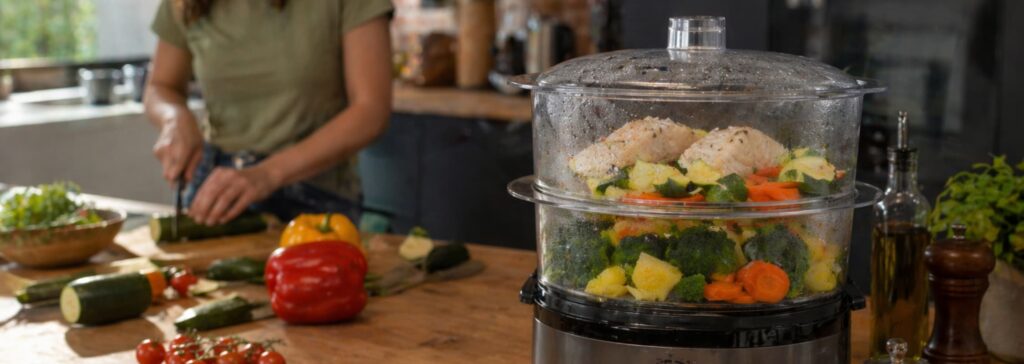
Steaming is often consideredone of the most nutritionally beneficial cooking methods . Gentle and even, it allows food to be cooked without direct contact with water or exposure to excessively high temperatures.
The result: foods retain more of their nutritional value while remaining enjoyable to eat.
It is particularly well-suited for vegetables, fish, and other delicate foods that do not tolerate high temperatures well.
It’s therefore an excellent everyday choice for combining nutritional balance, simplicity, and enjoyment on your plate.
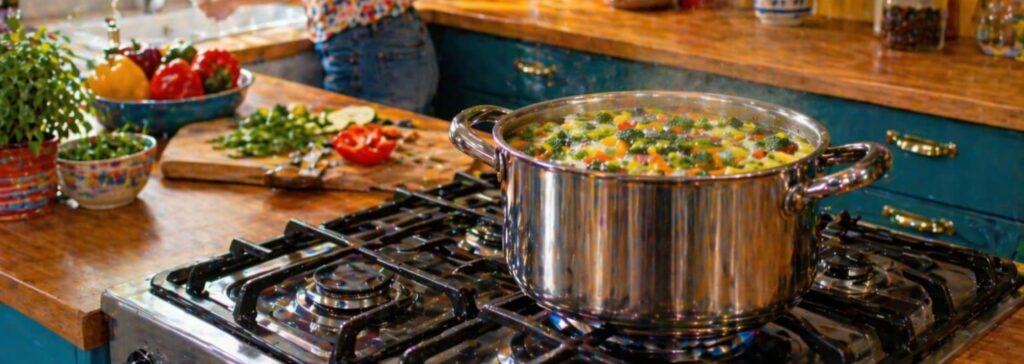
Although boiling is a very common cooking method, it has one major drawback: some of the nutrients leach into the cooking water, especially when the food is left in the water for a long time.
Result: Even if the food appears intact, some of its micronutrients may have leached into the cooking water.
A simple tip: Reusing this water ( in soups, broths, or sauces) helps you recover some of the nutrients and minimize waste.
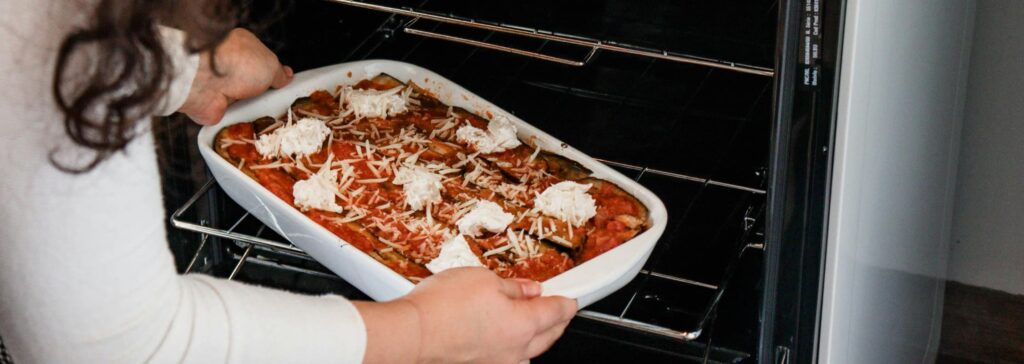
The oven offers great flexibility and can accommodate a wide variety of foods. Thanks to its convection heating, it provides relatively even cooking without direct contact with a heat source.
However, certain precautions are necessary:
The best approach is therefore to use moderate temperatures and cooking times appropriate for each food item, in order to preserve both flavor and nutritional value.
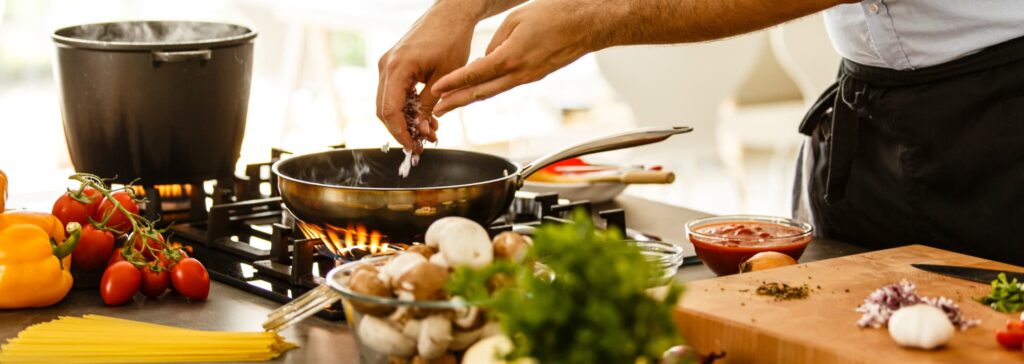
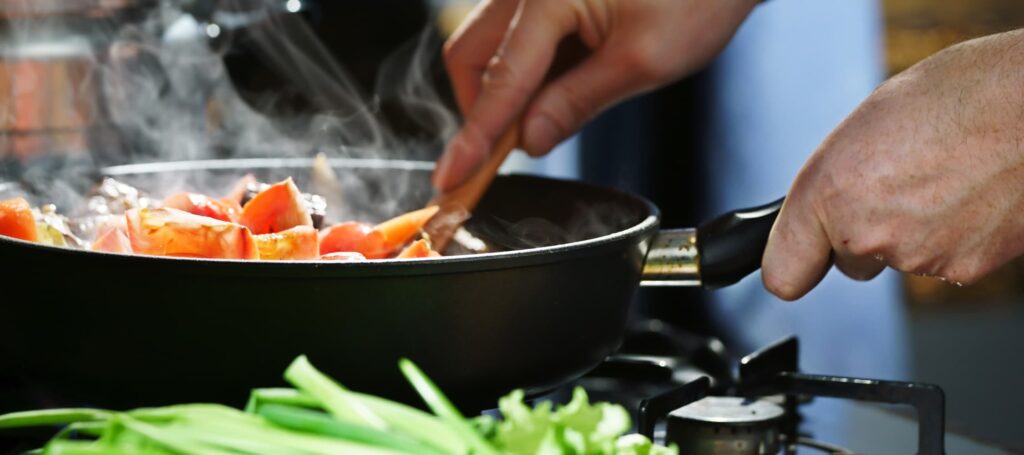
Widely used in everyday cooking, pan-frying is popular for its speed and the flavors it brings out, particularly thanks to the Maillard reaction (which gives food its golden color and toasted flavor).
But it does require a bit of caution:
The right approach: cook over medium heat, use suitable cooking fats (such as olive oil for gentle cooking), and avoid letting the pan smoke.

These cooking methods are often associated with social gatherings and produce flavors that people enjoy, but they are also the most nutritionally damaging .
This doesn’t mean you should avoid them entirely, but rather that you should eat them in moderation and adopt a few healthy habits: avoid burning food , limit overcooking, and switch to gentler cooking methods.

Rather than searching for the perfect method, it makes more sense to adopt a few simple habits.
Eating healthy doesn't mean giving up on enjoyment.
A balanced diet is based on a combination of healthy choices, without being overly restrictive.
The key is to find a sustainable balance that fits into your daily life.
In conclusion
Cooking is an integral part of our diet and plays a much more important role than we realize.
Without completely changing your habits, a few simple adjustments—such as opting for gentle cooking methods or avoiding excessive heat—can help better preserve the nutritional value of your meals.
The goal isn't perfection, but a more mindful approach to cooking that supports your daily well-being.