
There are approximately 639 muscles in the human body, and they alone account for an average of 40% of our body mass.
Muscles are much more than just the "engines" of movement. They enable us to walk, write, smile, or run... but also to breathe, digest, circulate blood, and even maintain our posture. In other words, they are active every moment of our lives.
But then, how do they actually work? And above all, what do they need to stay healthy and perform well?


These are the best known: biceps, triceps, quadriceps...
They are attached to bones by tendons and enable voluntary movements. It is thanks to them that you can run, lift an object, or smile.
Did you know? Just smiling activates around fifteen muscles!
These muscles are called "striated" because, under a microscope, they show alternating light and dark bands corresponding to their internal organization.

They line the walls of many organs: stomach, intestines, blood vessels, bronchi, bladder, etc.
What makes them special? They operate involuntarily, without conscious intervention.
For example, they provide:

Called the myocardium, it forms the wall of the heart.
It has a structure similar to striated muscles but functions completely independently thanks to an internal electrical system. Its rhythmic activity propels blood throughout the body, ensuring oxygenation and nutrient supply to tissues.

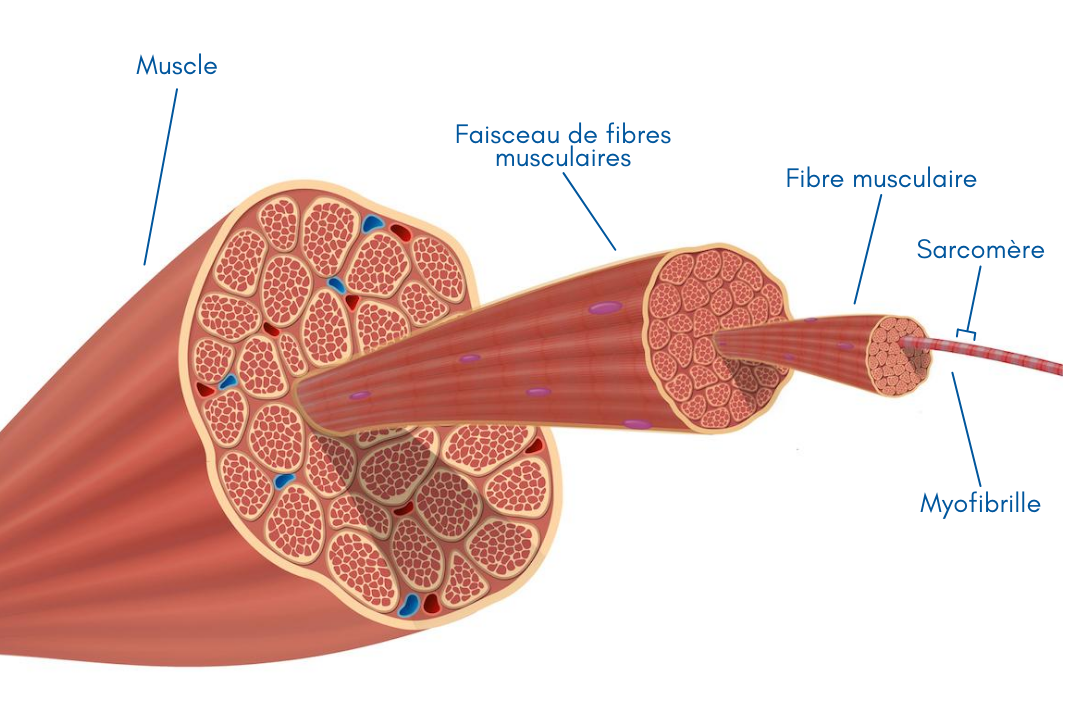
To the naked eye, a muscle looks like a simple "block" of flesh. However, when viewed under a microscope, we discover an extremely precise and structured organization. A skeletal muscle is made up of bundles, i .e ., groups of muscle fibers ( also called myocytes).
Each muscle fiber is actually a large, elongated cell capable of contracting. Inside each fiber are hundreds of even finer structures called myofibrils.
Myofibrils are like tiny contractile "cables" arranged along the entire length of the cell. These myofibrils are themselves composed of a series of small repeating units called sarcomeres.
The sarcomere is the basic functional unit of muscle, i.e. , the smallest structure capable of producing a contraction.
Inside the sarcomere are two essential proteins:

When the muscle receives a nerve signal, the myosin heads temporarily attach to the actin and pull on it.
The two filaments then slide over each other, shortening the sarcomere.
This shortening, repeated simultaneously in millions of sarcomeres, causes the muscle fiber to shorten... and then the entire muscle.
This process is called the filament slip mechanism.
It is this microscopic phenomenon, invisible to the naked eye, that enables each of our movements, from the most powerful to the most delicate.
For voluntary muscles, it all starts in the motor cortex of the brain. An electrical signal travels down the spinal cord to the muscle via a motor neuron.
At the neuromuscular junction, the signal becomes chemical (via a neurotransmitter called acetylcholine), triggering contraction.
Muscle contraction requires energy in the form of ATP ( adenosine triphosphate).
ATP is produced from:
Without ATP, no contraction is possible.

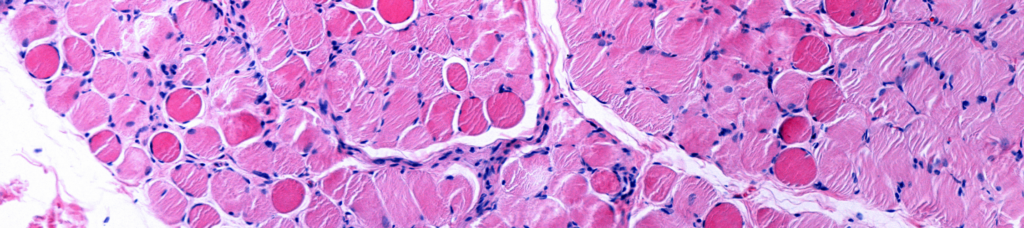
Not all muscles work in the same way. There are two main types:
They are used during explosive efforts (sprinting, weight training).
They are mobilized during prolonged efforts (fast walking, endurance). Each individual has a variable proportion of these fibers, influenced by genetics and training.
Good news: muscles have a great capacity to adapt.


Protein contributes to the maintenance and growth of muscle mass.
Specifically, they provide amino acids, which are the building blocks needed to build and repair muscle fibers after exercise.
Of the 20 existing amino acids, 9 are considered essential: the body cannot produce them itself. They must therefore be obtained from food.
We distinguish between:
Combining different plant sources (e.g., grains + legumes) or varying animal and plant proteins helps optimize overall protein quality.
Carbohydrates are the main source of readily available energy for muscles.
Once digested, they are converted into glucose and then stored as muscle glycogen. Glycogen is a strategic reserve: it is directly mobilized during physical exertion.
We distinguish between:
An adequate intake of carbohydrates therefore helps to support performance and limit muscle fatigue.


Often mistakenly perceived as something to be systematically limited, lipids are nevertheless essential for the proper functioning of the body.
They perform several major functions:
The key is to prioritize high-quality fats:
The balance between proteins, carbohydrates, and lipids remains the key to optimal and sustainable muscle function.
In short
- Vary your sources of protein (animal and plant) to provide all the amino acids necessary for maintaining muscle mass and tissue renewal. Your needs may change depending on your age, level of physical activity, or goals.
- Choose high-quality carbohydrates from minimally processed foods (whole grains, legumes, fruits, vegetables). These help replenish muscle glycogen stores and provide stable energy throughout the day.
- Choose beneficial fats, such as those found in vegetable oils, fatty fish, nuts, and seeds. They contribute to cell membrane structure and hormonal balance and are a valuable source of energy, especially during prolonged exertion.
- Maintain a balance between protein, carbohydrates, and fat. These macronutrients are complementary:
- Proteins support tissue structure and repair.
- Carbohydrates provide quickly available energy.
- Lipids perform long-term structural and energy functions.
An adequate and balanced intake is the basis for optimal muscle function and, more broadly, good overall health.
2- Micronutrients: the invisible regulators
Even in small quantities, they are indispensable.

Magnesium
Magnesium contributes to:
It is involved in more than 300 enzymatic reactions, particularly in the production of ATP.
Sources: cocoa, oilseeds, green vegetables, seafood.

Zinc
Zinc contributes to:
It plays an important role in cell repair mechanisms.
Sources: meat, seafood, legumes, seeds.
Omega-3
Omega-3 fatty acids (EPA and DHA) contribute to the proper functioning of cell membranes.
They are particularly studied in the context of inflammatory balance after exercise.
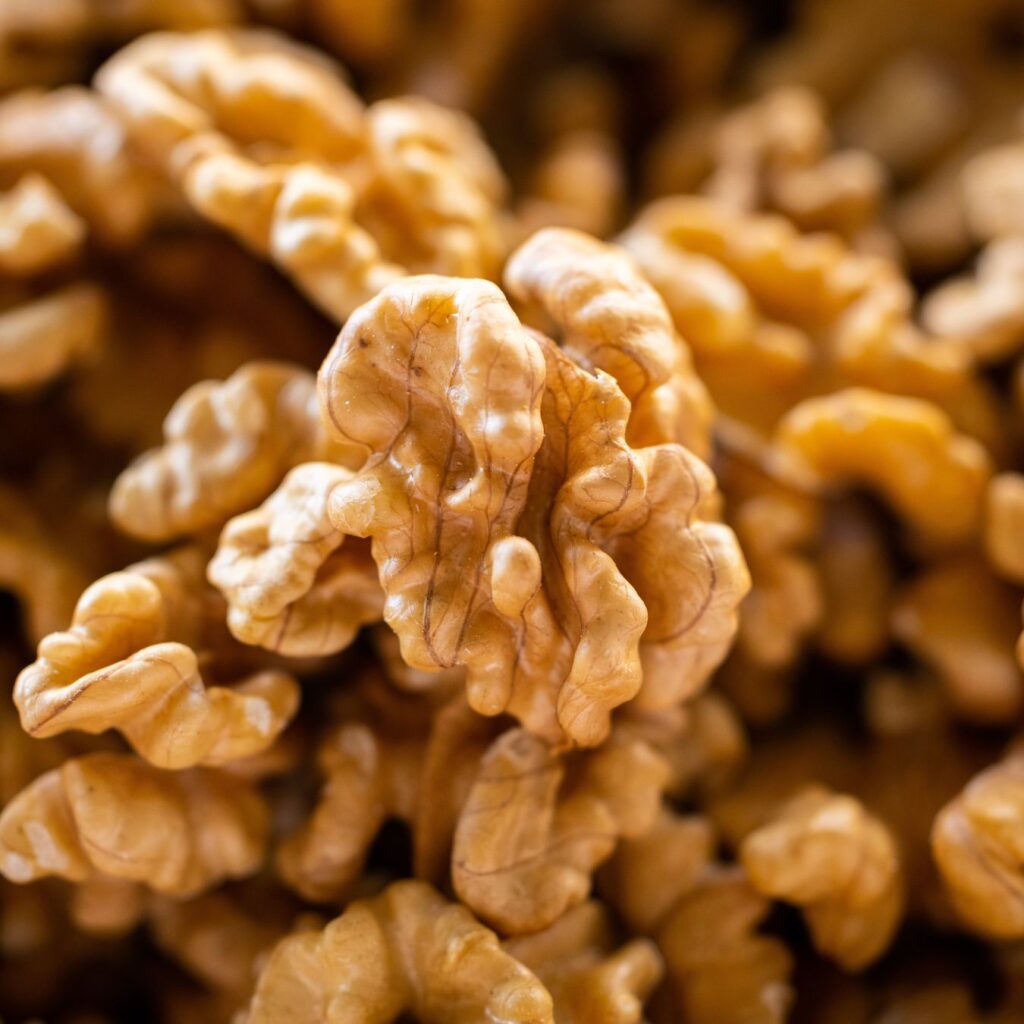
Sources: fatty fish , flaxseed oil, nuts, chia seeds.

3- Hydration: an often underestimated factor
Muscles are composed of approximately 75% water.
Water enables:
Even mild dehydration can impact performance and increase the likelihood of cramps.
Drinking regularly before, during, and after exercise is essential.
4- Physical activity and recovery

During exercise, muscle fibers undergo physiological micro-injuries.
It is during recovery that the muscle:
Without sufficient recovery, the muscle does not progress.

Deep sleep promotes:
Chronic sleep deprivation can impair recovery and increase the risk of injury.

Gentle activities such as:
promote blood circulation and support the elimination of metabolites produced during exercise.
Conclusion
Your muscles aren't just for moving. They are central to your vitality, posture, breathing, and even your metabolism.
To function optimally, they need three essential things: a suitable diet, sufficient hydration, and quality recovery.
Taking care of your muscles means investing in your overall health, both today and in the long term.